- Home
- Urban projects
Urban projects
The territory of the Brussels-Capital Region is constantly developing. Learn more about our urban projects (French or Dutch)
- Urban issues
Urban issues
Housing, facilities, economy, land... perspective.brussels collects and analyses the data essential to the development strategy of the Region. Learn more about these urban issues (French or Dutch)
- Statistics and analyses
- Planning tools
- Who are we?
The Compact Cities Partnership
Launch of a new Urban Agenda for the EU Partnership
Posted on 15 April 2026
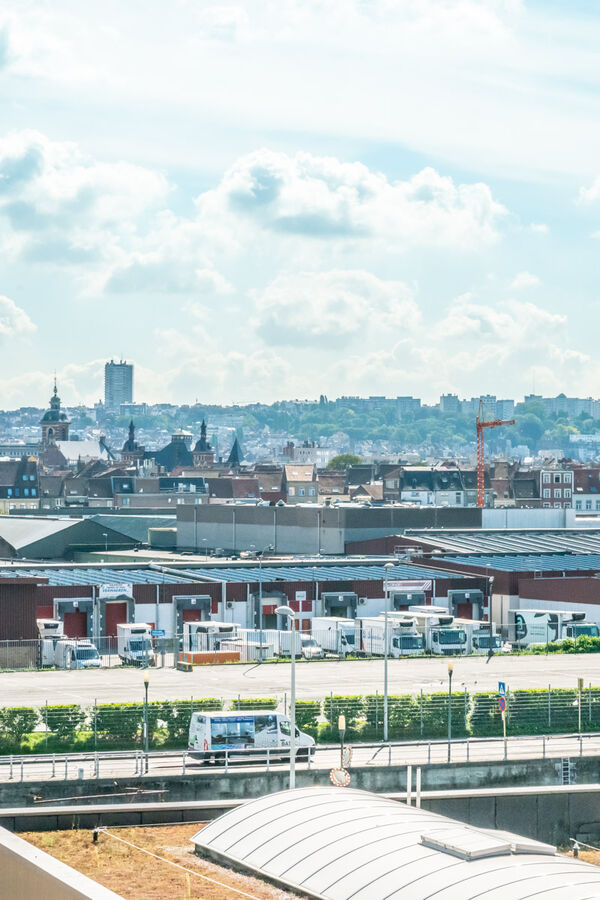
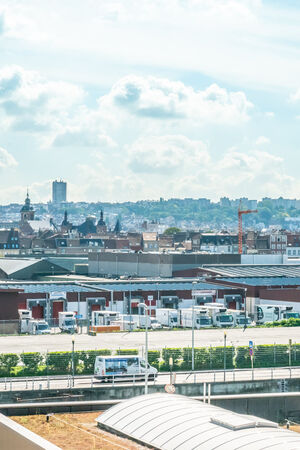
© perspective.brussels/Pedro Correa
Urban sprawl is a key challenge for the Brussels-Capital Region. Perspective (in collaboration with urban.brussels) represents the Brussels-Capital Region within the European Urban Agenda partnership “Compact Cities – Sustainable Urban Planning and Sprawl Mitigation”. This partnership brings together 26 other partners working towards sustainable urban development. It was launched in early 2026 and will run for three years.
Compact cities
The “compact city” model emphasizes a spatial planning strategy that makes better use of existing urban areas by intensifying land use and regenerating underused spaces.
This thematic partnership therefore aims to promote dense and sustainable urban development in response to the challenges posed by urban sprawl in Europe.
The partnership’s work will also strengthen reflection on the “city of proximity”, a strategy that promotes a dense, polycentric and mixed-use city, ensuring that residents have access to the services they need for their daily lives close to where they live.
What is the Urban Agenda for the EU?
The Urban Agenda for the EU is an initiative launched in 2016 by the European Commission, Member States and cities to address urban development challenges. It is based on the Pact of Amsterdam adopted on 30 May 2016 by European ministers responsible for urban affairs and revised by the Ljubljana Agreement of 26 November 2021.
The objectives of the Urban Agenda Partnerships are:
- Improve regulation to better take into account the needs of cities in European policies
- Foster exchanges between urban authorities, Member States and the European Commission
- Facilitate access to European funding for cities of all sizes
Since 2016, 21 partnerships have been established on various themes such as housing, energy transition and sustainable land use. The Brussels-Capital Region is currently involved in three ongoing partnerships: sustainable tourism, urban greening and compact cities. Two partnerships were completed in the past, focusing on urban poverty and security in public spaces.